
A medical computer cart is a mobile workstation designed to support bedside documentation, electronic medical rA medical computer cart is a mobile workstation that helps healthcare professionals access digital information at the point of care. It is designed for hospitals and clinics with needs for mobility, durability, hygiene, and flexible equipment use.
The right cart depends on factors such as design, materials, mobility, power options, and application requirements.
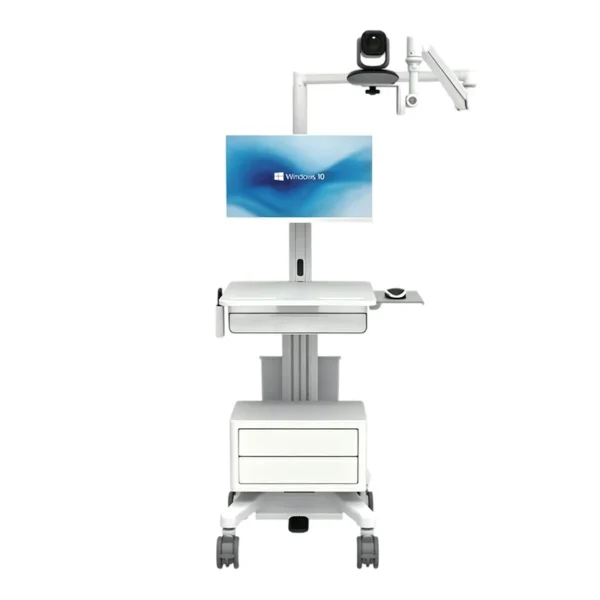
Why Is Choosing the Right Medical Computer Cart Important?
The wrong cart can create workflow problems. A model that does not match the department’s requirements may cause poor ergonomics, insufficient storage, limited mobility, or equipment compatibility issues.
Before purchasing, healthcare facilities should evaluate:
- Where the cart will be used
- What equipment it needs to support
- How frequently it will move
- Whether battery power is required
- How often it needs cleaning
A well-designed medical computer cart improves staff efficiency, reduces unnecessary movement, and creates a more organized clinical environment.
Main Types of Medical Computer Carts
Different departments require different configurations. Understanding the main categories helps buyers select the most suitable option.
Powered Medical Computer Cart
Powered medical computer carts include integrated battery systems that allow computers and accessories to operate without a fixed power outlet.
They are commonly used for:
- Long nursing shifts
- Intensive care units
- Emergency departments
- Mobile clinical documentation
Advantages include:
- Continuous operation during rounds
- Support for multiple electronic devices
- Greater flexibility in large healthcare facilities
However, powered models require battery maintenance and usually have a higher purchase cost.
Non-Powered Medical Computer Cart
Non-powered carts are designed for lightweight equipment such as laptops and tablets.
They are suitable for:
- Short bedside visits
- Physician rounds
- Mobile documentation
Benefits include:
- Lower initial cost
- Reduced weight
- Easier maintenance
- Simple operation
For facilities that mainly use battery-powered laptops or tablets, a non-powered medical computer cart may provide better value.
Laptop and Tablet Medical Carts
Laptop and tablet carts focus on portability and compact design.
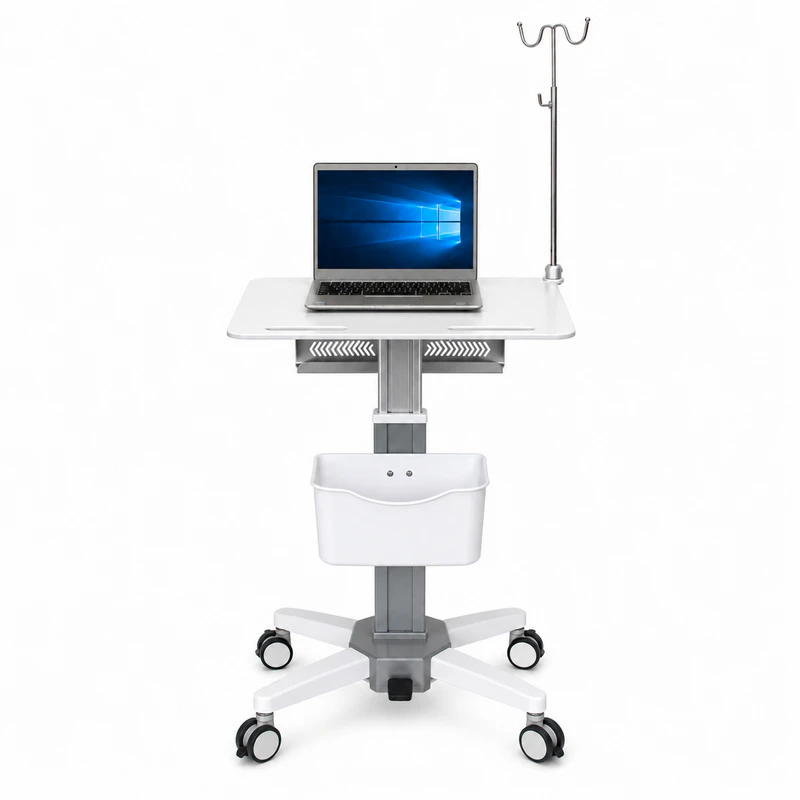
They are commonly used in:
- Nursing stations
- Patient rooms
- Outpatient clinics
- Telemedicine applications
These models usually emphasize lightweight construction, adjustable working height, and easy maneuverability.
How to Choose the Right Material?
Material selection directly affects durability, weight, cleaning, and service life.
Aluminum Medical Computer Cart
Aluminum is widely used for mobile medical workstations because it provides a balance between strength and lightweight performance.
Advantages include:
- Easy movement
- Corrosion resistance
- High structural stability
- Long service life
For hospitals requiring frequent movement between departments, aluminum medical computer carts are often an efficient choice.
Stainless Steel Medical Cart
Stainless steel provides excellent strength and chemical resistance.
It is commonly selected for:
- Surgical environments
- Treatment areas
- Equipment transport
However, stainless steel construction is generally heavier than aluminum, which may reduce mobility.
ABS and Composite Materials
ABS and composite materials are often used for work surfaces, covers, and storage components.
Their advantages include:
- Smooth surfaces
- Easy cleaning
- Rounded edges
- Modern appearance
When selecting materials, buyers should confirm compatibility with hospital disinfectants and cleaning procedures.
How to Select a Medical Computer Cart for Different Applications?
The correct configuration depends on the clinical environment.
| Application | Recommended Features |
|---|---|
| Bedside documentation | Compact design, adjustable height, quiet casters |
| Nursing workflow | Storage drawers, scanner holder, ergonomic workstation |
| Medication management | Lockable drawers, barcode support, organized accessories |
| ICU and emergency | Stable base, strong brakes, reliable power |
| Telemedicine | Monitor mount, camera support, cable management |
For example, a nursing workstation cart may require additional storage, while a physician rounding cart may prioritize lightweight mobility.
What Specifications Should You Check Before Buying?
A professional purchasing process should include a detailed specification review.
Important factors include:
Load Capacity
Confirm the total weight the cart can safely support, including:
- Computer
- Monitor
- Battery
- Accessories
- Stored supplies
Height Adjustment
Adjustable height improves comfort for different users and supports both sitting and standing workflows.
Common adjustment methods include:
- Manual adjustment
- Pneumatic adjustment
- Electric adjustment
Mobility System
Casters affect daily usability.
Consider:
- Wheel diameter
- Brake performance
- Noise level
- Floor compatibility
- Turning flexibility
Cable Management
A good medical computer cart should keep cables organized and protected to improve safety and appearance.
How Much Does a Medical Computer Cart Cost?
Medical computer cart prices vary significantly depending on configuration, cost anywhere from $150 to over $15,000, depending on the model and features. The total cost is determined by whether the cart is a basic mobile desk or a fully powered hospital workstation on wheels.
The main cost factors include:
- Material selection
- Battery system
- Height adjustment method
- Storage options
- Monitor mounting system
- Accessories
- Customization requirements
- Order quantity
Basic non-powered laptop carts usually cost less, while advanced powered workstations with electric lifting systems, batteries, and customized accessories require a larger investment.
When comparing suppliers, buyers should consider total ownership cost, including maintenance, replacement parts, warranty support, and service life.
Why Choose a Professional Medical Computer Cart Manufacturer?
A reliable manufacturer provides more than a product. They provide engineering support, customization options, quality control, and long-term service.
LUVXOM Medical specializes in medical computer carts, mobile workstations, and healthcare equipment solutions. The company provides customizable options including aluminum structures, monitor mounts, storage configurations, and OEM/ODM solutions for different healthcare applications.
Frequently Asked Questions
What is the best medical computer cart for hospitals?
The “best” medical computer cart (often called a COW or WOW—Computer/Workstation on Wheels) depends on your specific workflow. Industry-leading options are purpose-built for infection control, power longevity, and maneuverability.
Should I choose a powered or non-powered medical computer cart?
Choose powered models for long clinical shifts and multiple devices. Choose non-powered models for lightweight laptops and tablets.
Are aluminum medical computer carts durable?
Yes, aluminum medical computer carts are highly durable and are specifically chosen for mobile workstations because they can withstand years of demanding clinical use while remaining lightweight and easy to maneuver.
Can medical computer carts be customized?
Yes. Many manufacturers offer customization for dimensions, accessories, storage, colors, and branding.LUVXOM provides OEM/ODM customization services for medical computer carts, including size, accessories, storage configuration, colors, and logo branding to support different healthcare projects and requirements.
What factors affect medical computer cart prices?
Material, power system, accessories, customization, production quantity, and technical requirements all influence pricing.


